Spotlight on… the EHRI National Node in Poland: EHRI-PL
In this episode of Spotlight on… we focus on EHRI in Poland, and talk to Zofia Trębacz.
Hi Zofia, every National Node has a lead institution with a coordinator who is a member of the National Coordinating Committee, which plays an important role in EHRI’s overall governance. Who is your National Coordinating Institute and Coordinator?
The Emanuel Ringelblum Jewish Historical Institute is the coordinating institution, and I am the National Coordinator.
EHRI National Nodes come in different shapes and sizes. How big is the Polish National Node?
Currently our node includes three institutions: the Jewish Historical Institute and the Polish Center for Holocaust Research, a section of the Institute of Philosophy and Sociology of the Polish Academy of Sciences, and the Philip Friedman Centre for Jewish Studies at the University of Lodz.
Have you joined EHRI recently, since we became an ERIC, or have you been part longer than that?
The Jewish Historical Institute has been actively involved in EHRI since its inception and is an important member of the Infrastructure in the Eastern Europe region. Over the years, the people from our Institute involved in EHRI have changed. I joined at the end of 2024, in connection with the transition to EHRI-ERIC. Before that, I took part in various EHRI events and co-organized several of them at the Jewish Historical Institute. I have always greatly appreciated EHRI’s role in improving access to archives and fostering an international research network, but since becoming more personally involved in the project, I’ve also been deeply impressed not only by the exceptional expertise but also by the kindness and helpfulness of the people working within EHRI. It’s a wonderful community united by research on the Holocaust and antisemitism!
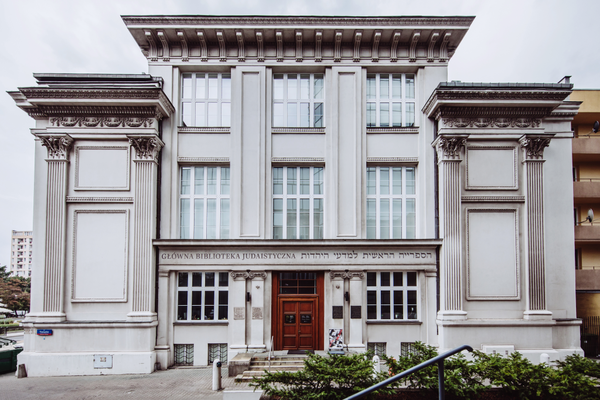
Could you tell us a bit about the institutions that are now part of the Polish National Node? The Emanuel Ringelblum Jewish Historical Institute was created in 1947, as a continuation of the Central Jewish Historical Commission, operating under the Central Committee of Polish Jews. It has its headquarters at 5 Tłomackie Street in Warsaw, in the rebuilt building of the pre-war Institute of Judaic Studies and the Central Judaic Library. It created the Central Archive of Polish Jewry to make the documents available to researchers as soon as possible, established the Library, which took over the collection of the Central Jewish Library, and set about organizing a museum. It also began a search for further parts of the Ringelblum Archive and initiated the publication of a Jewish-language historical quarterly ‘Bleter far Geszichte’.
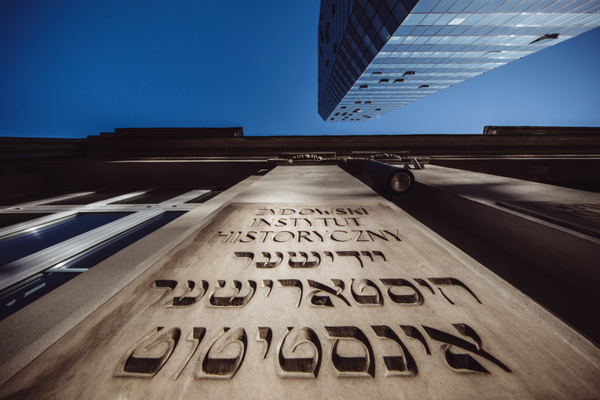
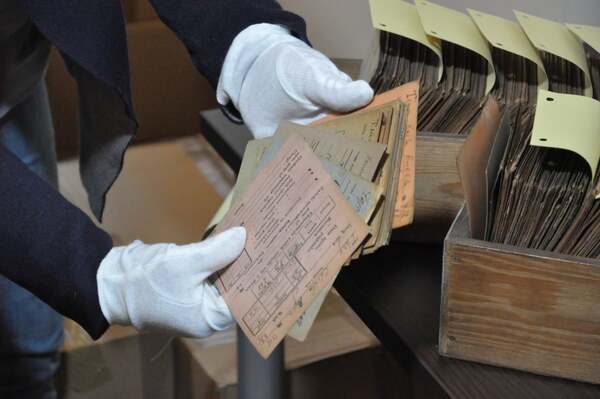
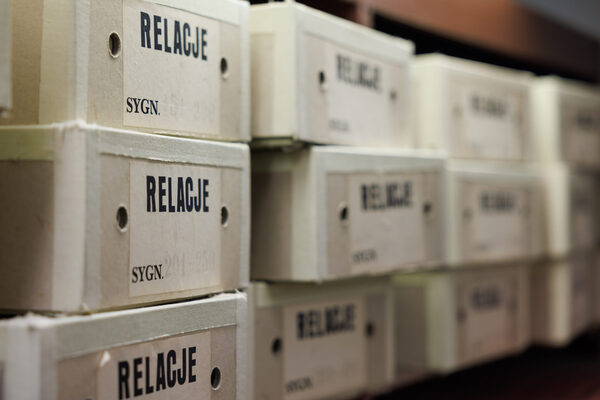
Nowadays, the Jewish Historical Institute is among the oldest research institutions in the world focused on the history of Eastern European Jews. Founded by Holocaust survivors immediately after WW2, the Institute stores one of the most significant collections worldwide, including seven million pages of diverse documents, books, photographs, works of art, objects, and Judaica. Among the most relevant collections is the Underground Archive of the Warsaw Ghetto, known as the Ringelblum Archive. Due to its unique value, the Ringelblum Archive became a part of the UNESCO Memory of the World list. The Institute’s mission is to preserve, digitalize, and make accessible historical materials from its collections. The Institute is not only a repository of documents related to the historical presence of Jews in Poland but also a center for academic research aimed at promoting knowledge about the history and culture of Polish Jews through its rich collections. It serves both as a custodian of the historical memory and as a vibrant cultural center, actively contributing to the development of historical consciousness.
The Polish Center for Holocaust Research was established in 2003, as a section of the Institute of Philosophy and Sociology of the Polish Academy of Sciences. It groups researchers from different humanities disciplines: historians, literary scholars, sociologists and psychologists. Its aim is to carry out interdisciplinary research, combine different methodologies, overcome existing schemata in Holocaust narration, uncover various cognitive perspectives and points of view, demonstrate the variety and ambiguity of historical events. The Center is involved in a number of fields – academic, educational and publishing. The researchers are trying to fill the gaps in knowledge about Holocaust, discovering new topics and scientific approaches, thus sometimes dealing with difficult problems in the context of common memory.
The Philip Friedman Centre for Jewish Studies at the University of Lodz was established in 2005. The Philip Friedman Center for Jewish Studies is an academic research department focused on the history of Jews during the Holocaust with a special interest in the history of the Lodz Ghetto. The main areas of the Center’s activity are comprehensive studies of the history of the Lodz ghetto and the wartime fate of Jewish communities in central Poland. Researchers affiliated with the Phillip Friedman Center actively participate in international scientific life and are members of interdisciplinary international research projects.
How was the process of forming a node?
In fact, we are still in the process of forming the Polish National Node, but we hope it will be completed soon. The Polish Center for Holocaust Research is an institution with which the Jewish Historical Institute has been cooperating for many years. Also, it has been a member of EHRI since 2015 (the EHRI-2 project). However, the finalization of the entire process is taking more time than we originally expected. Fortunately, in mid-2025 we received funding from the Ministry of Culture and National Heritage, which allowed us to start the first EHRI-PL activities.
What are your plans for the near future as EHRI-PL?
One of our main goals is to make our archival collections more widely accessible. The Jewish Historical Institute holds truly remarkable collections, though not all of them are equally well known. Some materials were created in Yiddish or Hebrew, which limits access for many researchers. We aim to translate these documents and provide scholarly commentary. Our first priority will be to work on the unique testimonies from the very important Collection 301. We also plan to organize a conference on this topic next year.
For the Jewish Historical Institute, creating a community of researchers focused on Holocaust studies has always been very important. As a Polish National Node, we will continue this work by organizing academic seminars and workshops for early-career researchers, as well as participating in the outstanding initiative that is the Conny Kristel Fellowship program.
What are the benefits of having a node and being part of a bigger organisation (ERIC)?
The fact that EHRI has been active in so many countries for so many years is proof that it is an extremely valuable initiative. The opportunity for transnational research collaboration is always highly beneficial. It allows for the exchange of knowledge and experience, discussion and implementation of international projects, as well as gaining an understanding of the specific nature of local archives and research centers. It also serves as a strengthening factor for Holocaust research, which is particularly important in today’s times.
Whas there a personal highlight for you since you became National Coordinator?
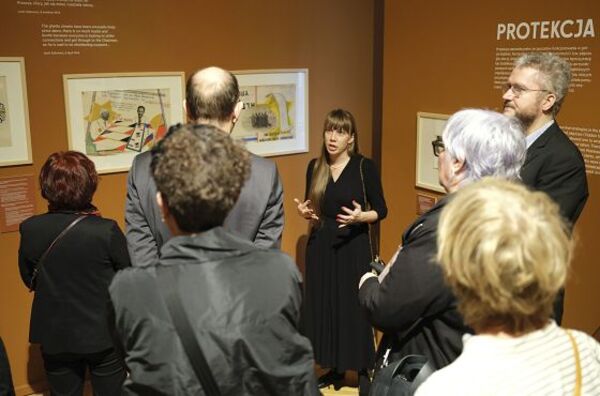
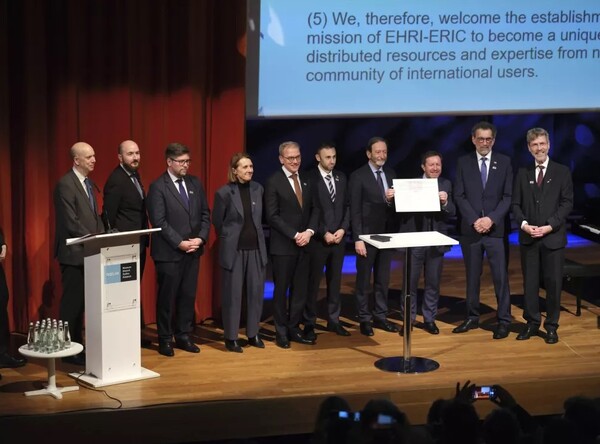
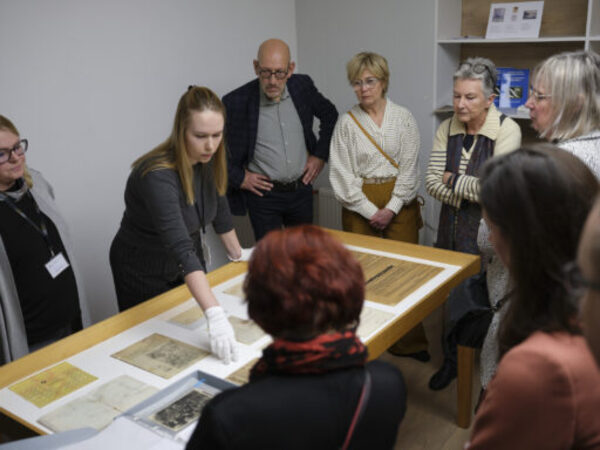
Without a doubt, a very important moment for me was the inauguration of EHRI-ERIC, which took place in Poland. The official ceremony was preceded by a visit of the guests to the Jewish Historical Institute, where we were able not only to present our collections but also to guide them through the exhibition on the Łódź Ghetto, which I co-curated. I am proud that we managed to organize everything in such a short period of time.
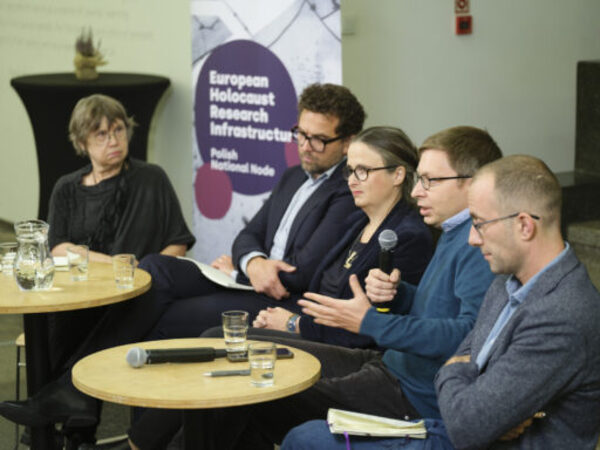
I am also very pleased that recently, at the beginning of October, a debate titled “Holocaust Research after October 7, 2023: Changes, Continuities, Challenges” was held at the Jewish Historical Institute. During the event, researchers from leading academic institutions discussed how the Hamas attack of October 2023 and the ensuing war in Gaza have influenced – and continue to influence – Holocaust scholarship. This event marked the inauguration of the Polish National Node, but for me personally, it was especially meaningful that such a debate took place at the Jewish Historical Institute – because of the history of this place and my role as the EHRI-PL coordinator.
Thank you very much, Zofia!