The Jewish Historical Institute as a Creator of Memory of the Holocaust. Mark–Datner–Tych
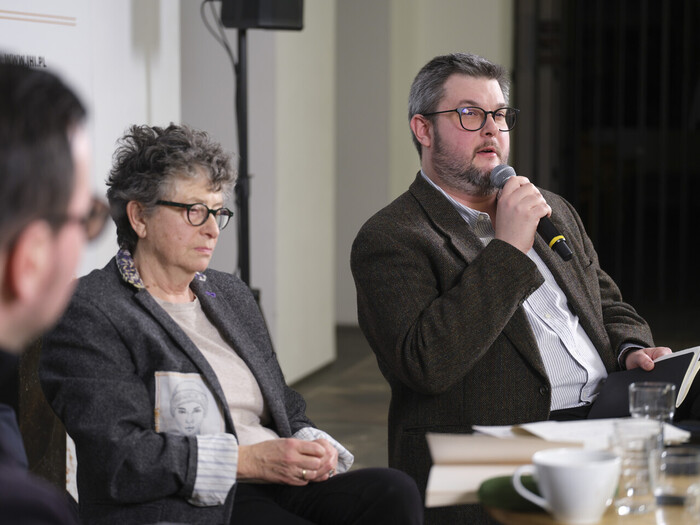
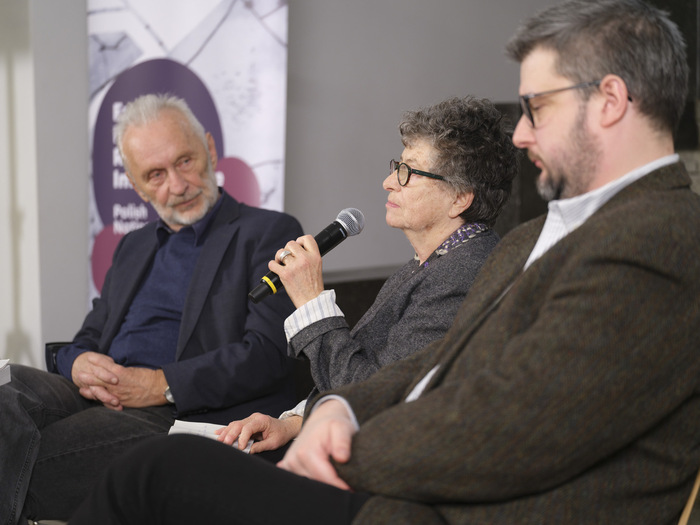
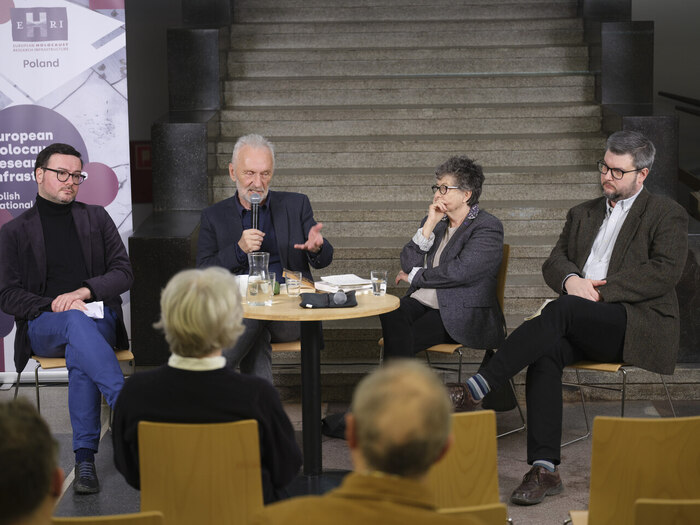
On January 27, 2026, a research seminar entitled The Jewish Historical Institute as a Creator of Memory of the Holocaust. Mark–Datner–Tych, was held.
The Jewish Historical Institute (JHI) plays a key role as an institutional agent of Holocaust memory, integrating scholarly research, archival work, and educational activities. From the very first postwar years, it served as a site for the collection of testimonies, documents, and survivors’ accounts, as well as a space for reflection on the experience of the Holocaust in its Polish and broader European dimensions.
Through the work of scholars who also served as its directors – such as Bernard Mark, Szymon Datner, and Feliks Tych – the Institute not only documented the Holocaust but also actively co-shaped its social and cultural memory. It became a place where archives, scholarship, and the ethics of remembrance converge, creating enduring frameworks for understanding the Holocaust in Poland and beyond.
YouTube
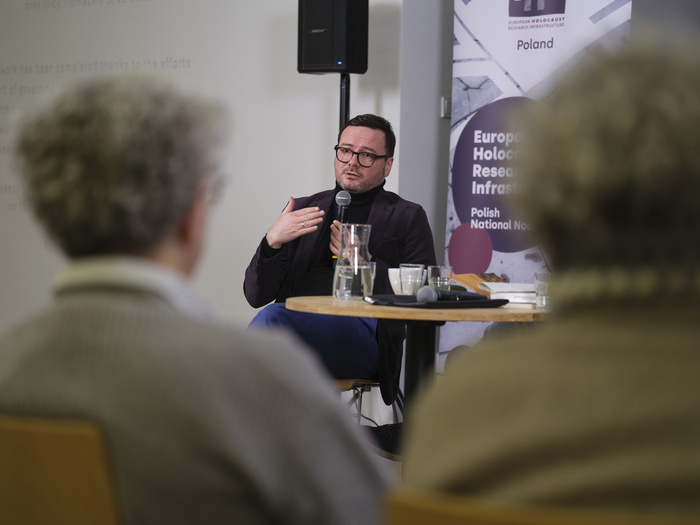
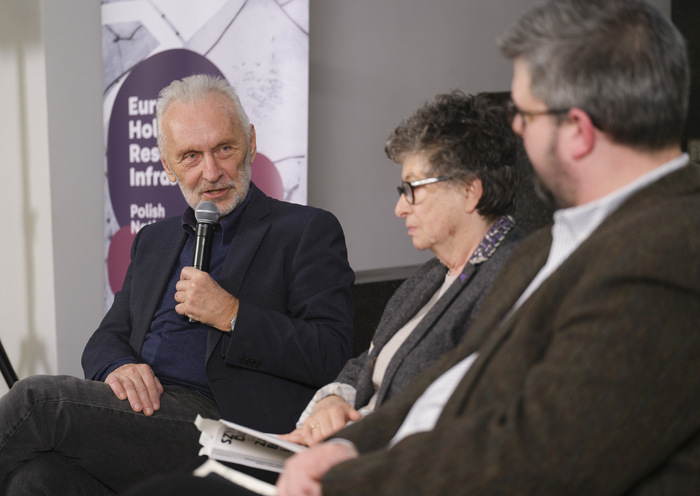
Chair: Prof. Andrzej Żbikowski
Participants: Dr. Helena Datner, Dr. Stephan Stach, Dr. Tomasz Siewierski
Andrzej Żbikowski – historian and political scientist, researcher in the Research Department of the Jewish Historical Institute, and professor at the Centre for Eastern Studies of the University of Warsaw. Editor and publisher of source documents, including Jürgen Stroop’s report on the suppression of the Warsaw Ghetto Uprising, Żydowska dzielnica mieszkaniowa w Warszawie już nie istnieje! [The Jewish Residential District in Warsaw Is No More!], as well as Volume 3 of the Complete Edition of the Ringelblum Archive, Relacje z Kresów [Accounts from the Eastern Borderlands]. Recipient of the Hirszowicz Award (2021).
Helena Datner – a sociologist by training, participant in the first research project on antisemitic attitudes carried out in in Poland: Struktura i wyznaczniki postaw antysemickich [Structure and Determinants of Antisemitic Attitudes] [in:] ed. I. Krzemiński, Czy Polacy są antysemitami [Are Poles Antisemites?] (1996). She has researched the social history of Jews in the nineteenth century: Ta i tamta strona. Żydowska inteligencja Warszawy drugiej polowy XIX wieku [This Side and That Side. The Jewish Intelligentsia of Warsaw in the Second Half of the 19th Century] (2007), post-war history, including welfare and educational institutions: Po Zagładzie. Społeczna historia żydowskich domów dziecka, szkół, kół studentów w dokumentach Centralnego Komitetu Żydów w Polsce [After the Holocaust. A Social History of Jewish Children’s Homes, Schools, and Student Associations in the Documents of the Central Committee of Jews in Poland] (2016), as well as the antisemitism of the ruling party and social antisemitism in the period of the Polish People’s Republic (in articles). She has also studied the history of the Jewish Historical Institute; together with Olga Pieńkowska she authored Instytut. 70 lat działalności w dokumentach źródłowych [The Institute. 70 Years of Activity in Source Documents] (2017). In recent years she has written on the Holocaust in the Białystok District, among others “Szymon Datner: Życie i praca” [Szymon Datner: Life and Work] [in:] Szymon Datner, Zagłada Białegostoku i Białostocczyzny. Notatki Dokumentalne [The Destruction of Białystok and the Białystok Region. Documentary Notes] (2023).
Stephan Stach – a historian specializing in the history of Poland and Polish-Jewish relations in the twentieth century. In 2015, he received his PhD from Martin Luther University Halle-Wittenberg with a dissertation on ethnic policy in the Second Polish Republic. As a postdoctoral researcher, he worked, among others, at the Leibniz Institute for the History and Culture of Eastern Europe (GWZO) in Leipzig, the Institute of Contemporary History in Prague, and the POLIN Museum of the History of Polish Jews. He currently heads the Liberal Democracy program at the Zentrum Liberale Moderne think tank in Berlin. His major publications include: Nationalitätenpolitik aus der zweiten Reihe: Konzepte und Praktiken zur Einbindung nationaler Minderheiten in Piłsudski’s Poland (2024); Holocaust Memory and the Cold War. Remembering across the Iron Curtain, co-edited with Anna Koch (2024); and Growing in the Shadow of Antifascism. Remembering the Holocaust in State-Socialist Eastern Europe, co-edited with Kata Bohus and Peter Hallama (2022).
Tomasz Siewierski (b. 1985) – historian, assistant professor at the L. and A. Birkenmajer Institute for the History of Science of the Polish Academy of Sciences. His research focuses on the history of historiography, the political and organizational aspects of the history of science, and biography studies. He is the author of the monograph Marian Małowist i krąg jego uczniów [Marian Małowist and the Circle of His Students] (2016). He co-authored the lexicon Warszawa Walczy 1939–1945 [Warsaw Fights 1939–1945], edited by K. Komorowski (2014). He prepared the edition of Dziennik 1958–1981 [Diary 1958–1981] by Władysław Czapliński (2024). He is also a co-author of an extended interview with Andrzej Friszke (2022) and the author of a book-length interview with Rafał Stobiecki (2023).